
Before Portugal Was Portugal: Walking Through Conímbriga
Uma cidade que ficou parada no tempo - a city frozen in time.
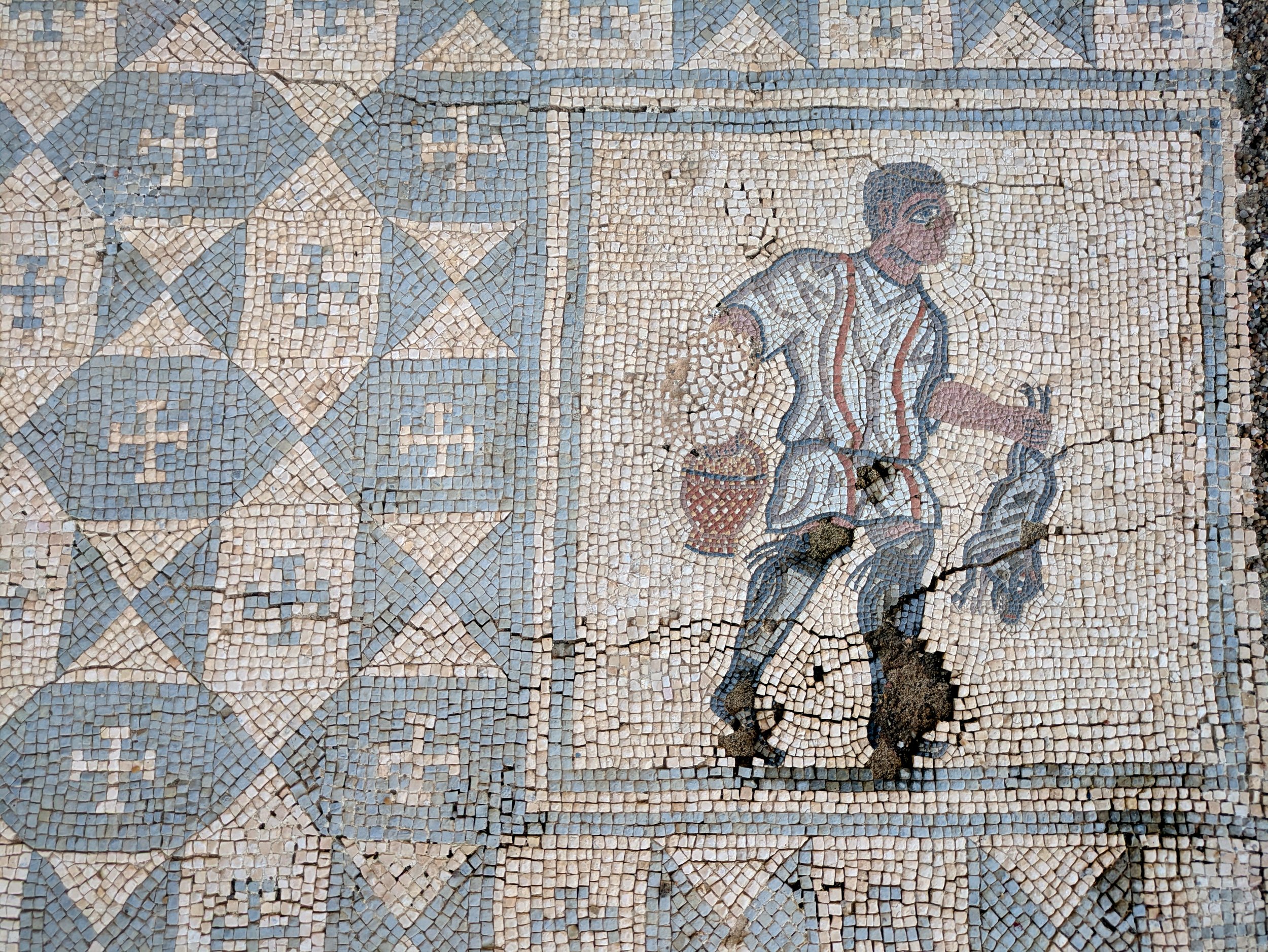
Mosaic design featuring the figure of a hunter or peasant holding an animal in one hand (often identified as a piglet or a hare) and a container in the other. Location: This figurative panel is integrated into a geometric pavement in the Casa dos Repuxos (or Casa das Fontes), famous for its gardens and intact polychrome pavements.
Somewhere between Coimbra and the coast, just outside the quiet town of Condeixa-a-Nova, there is a place where the ground still holds the shape of a Roman city. Not a ruin in the loose sense of the word. It’s more than a few scattered stones and a plaque. But an actual city with streets and courtyards. You can see the channels where water once ran beneath heated mosaic floors. Floors so intact you can stand over them and trace the geometry with your eyes.
If you’re learning European Portuguese, or dreaming of Portugal, Conímbriga is one of the most extraordinary places you can visit.
A city that refused to disappear
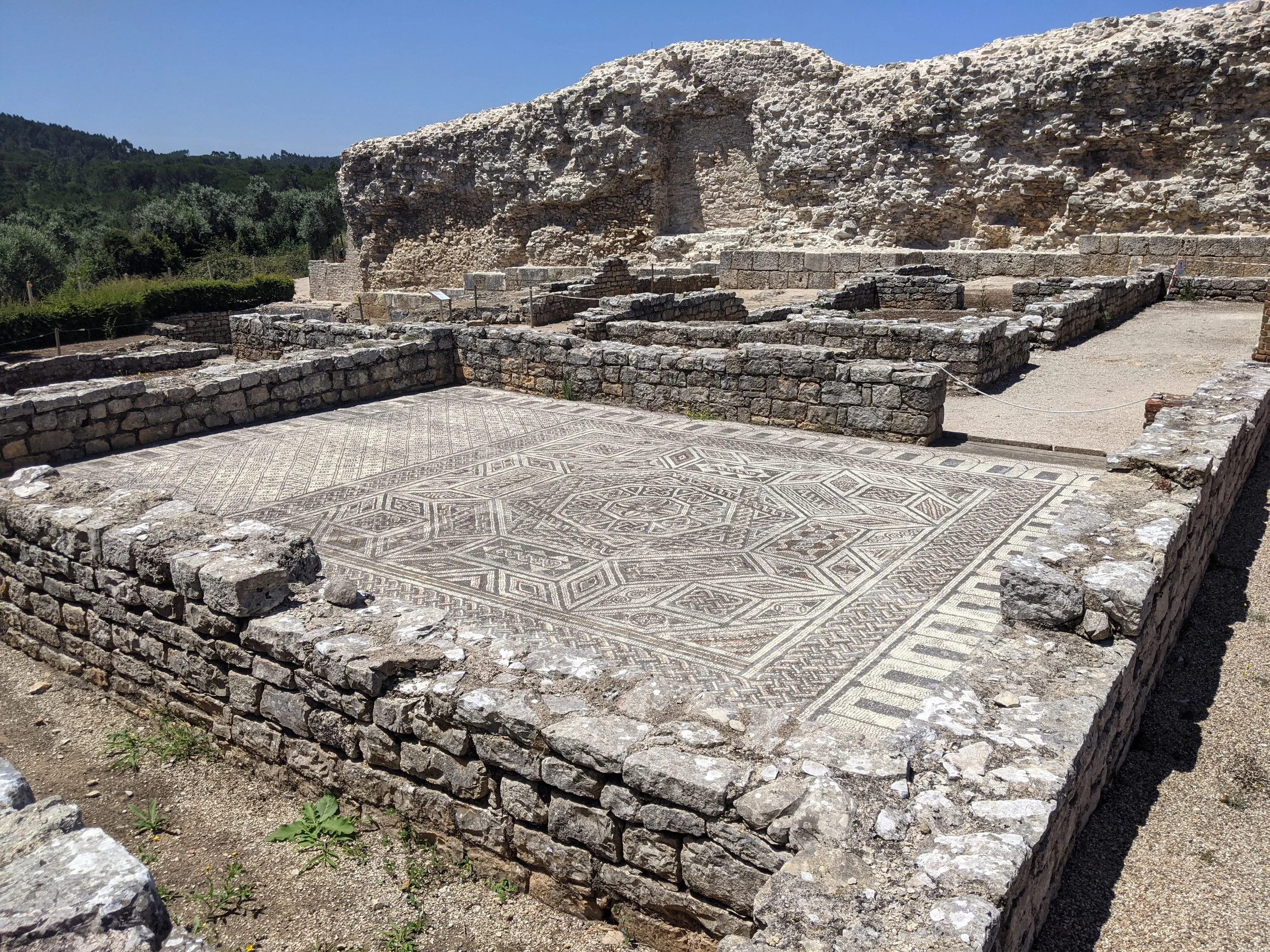
Conímbriga is one of the largest and best-preserved Roman settlements on the Iberian Peninsula. People lived here continuously from at least the 9th century BC through the 5th century AD; through the Iron Age; through Roman occupation; through the Flavian rebuilding of the city; through the construction of a great defensive wall; and finally through the Suebian invasions that scattered its last inhabitants.
What makes Conímbriga remarkable is not just its age. It is the texture of it. The Romans did not simply plant a camp here. They built a civitas, a proper city, with all the institutions and infrastructure that implied: a forum, a basilica, commercial shops, public thermae (thermal baths), an aqueduct, and the private homes of wealthy citizens surrounded by interior gardens and fountains.
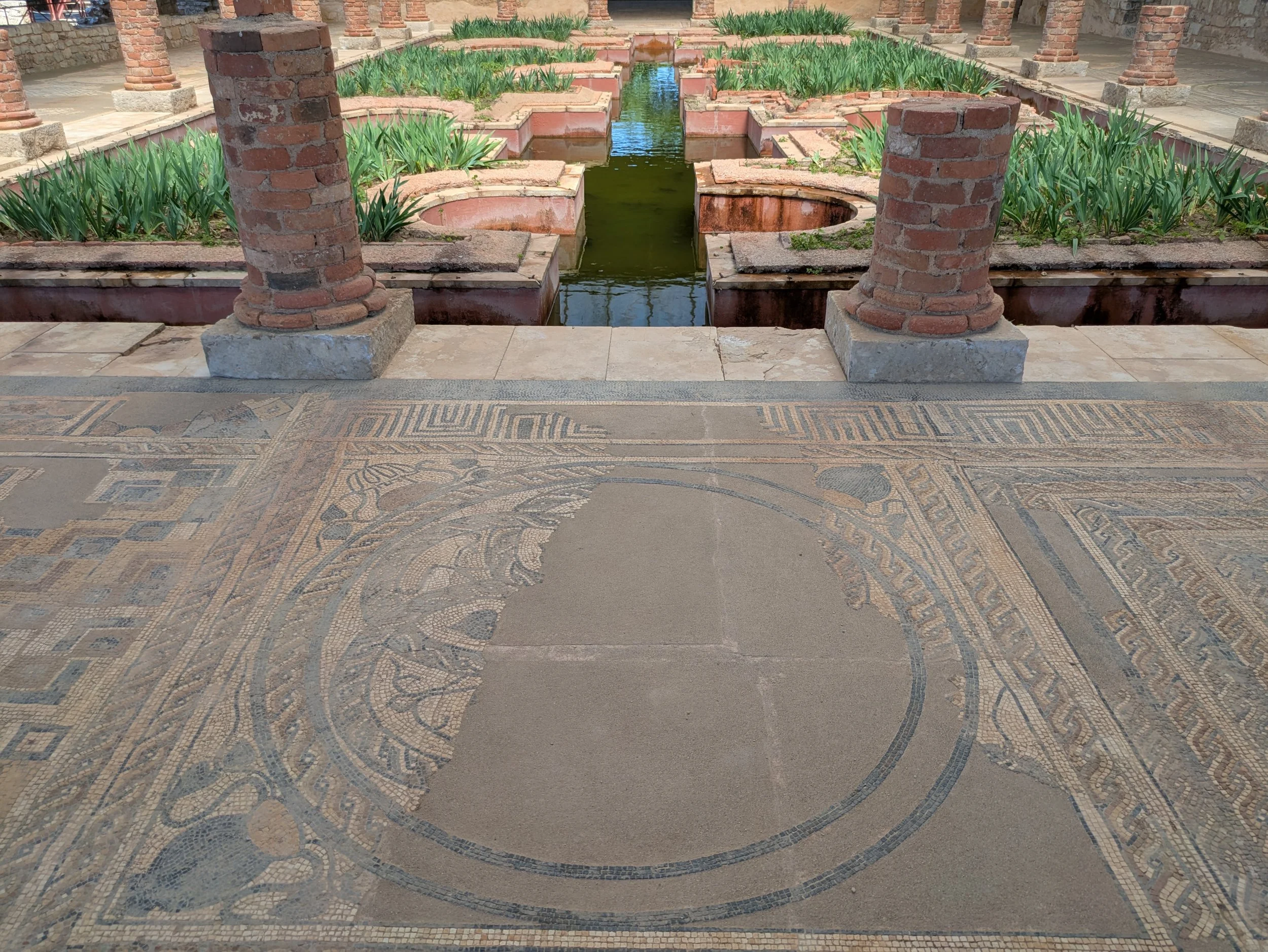
The two most celebrated of those homes are the Casa dos Repuxos, the House of the Fountains, and the Casa de Cantaber. Both are domus with peristyle courtyards: open-air gardens enclosed by columns, where the sound of water and the geometry of stone created a kind of ordered calm. The Casa dos Repuxos takes its name from the elaborate fountain system at its center. Even without water, the basin and its arrangement hold a quiet elegance.
The mosaics
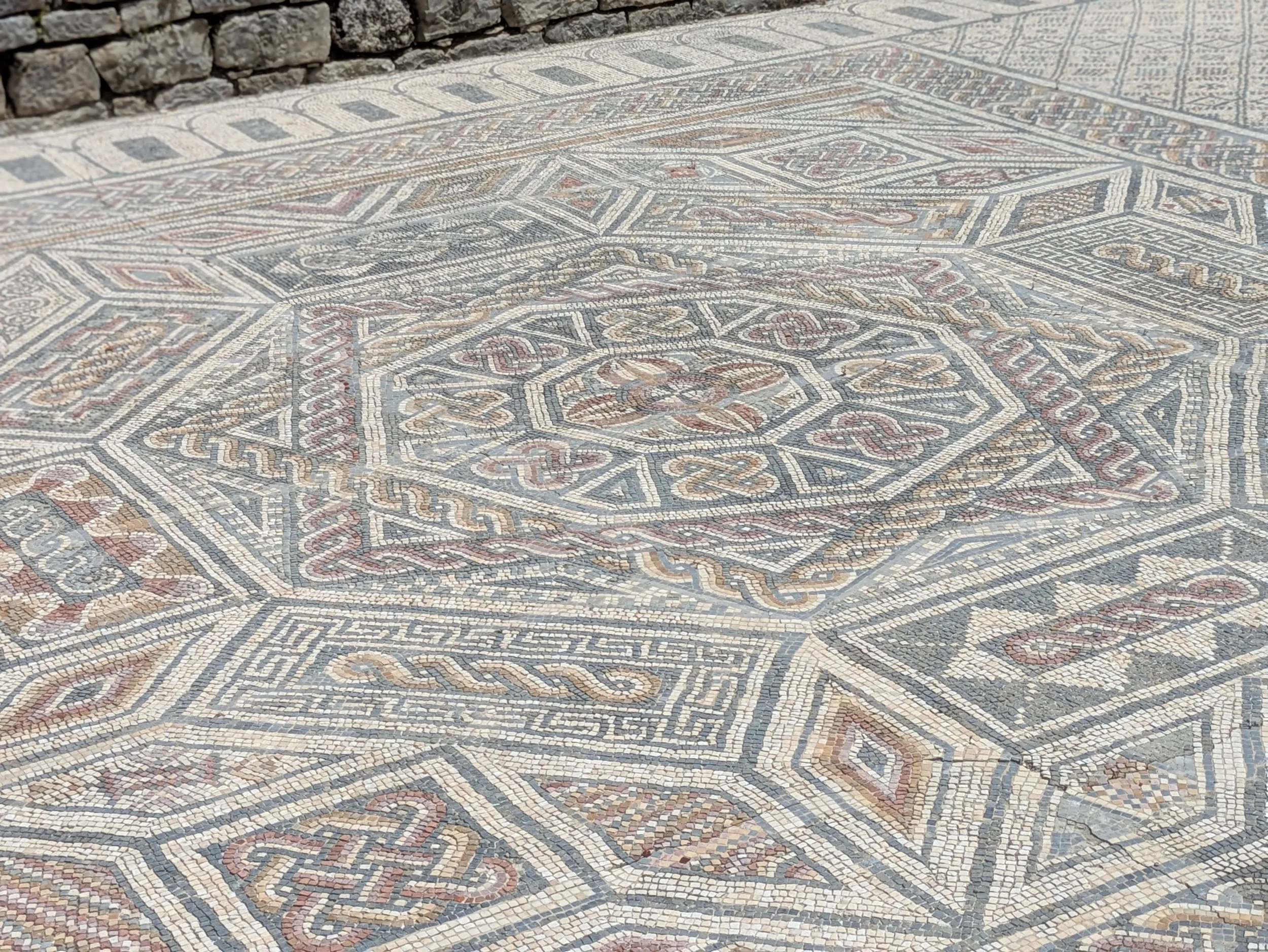
If there is one thing that stops people in their tracks at Conímbriga, it is the mosaics.
They cover entire floors with geometric patterns, mythological scenes, and ocean creatures. They were all assembled from tiny fragments of stone and glass called tesselas. Some date to the 2nd century AD. Some are so detailed, so perfectly composed, that it is difficult to understand how they survived at all.
Walking alongside them (many are protected behind low barriers or glass) you begin to understand something about the Roman world that a history book cannot quite convey: that beauty was considered part of daily life, not a luxury reserved for temples or palaces. A wealthy citizen of Conímbriga woke up every morning and walked across art.
Under the floor: the hipocausto
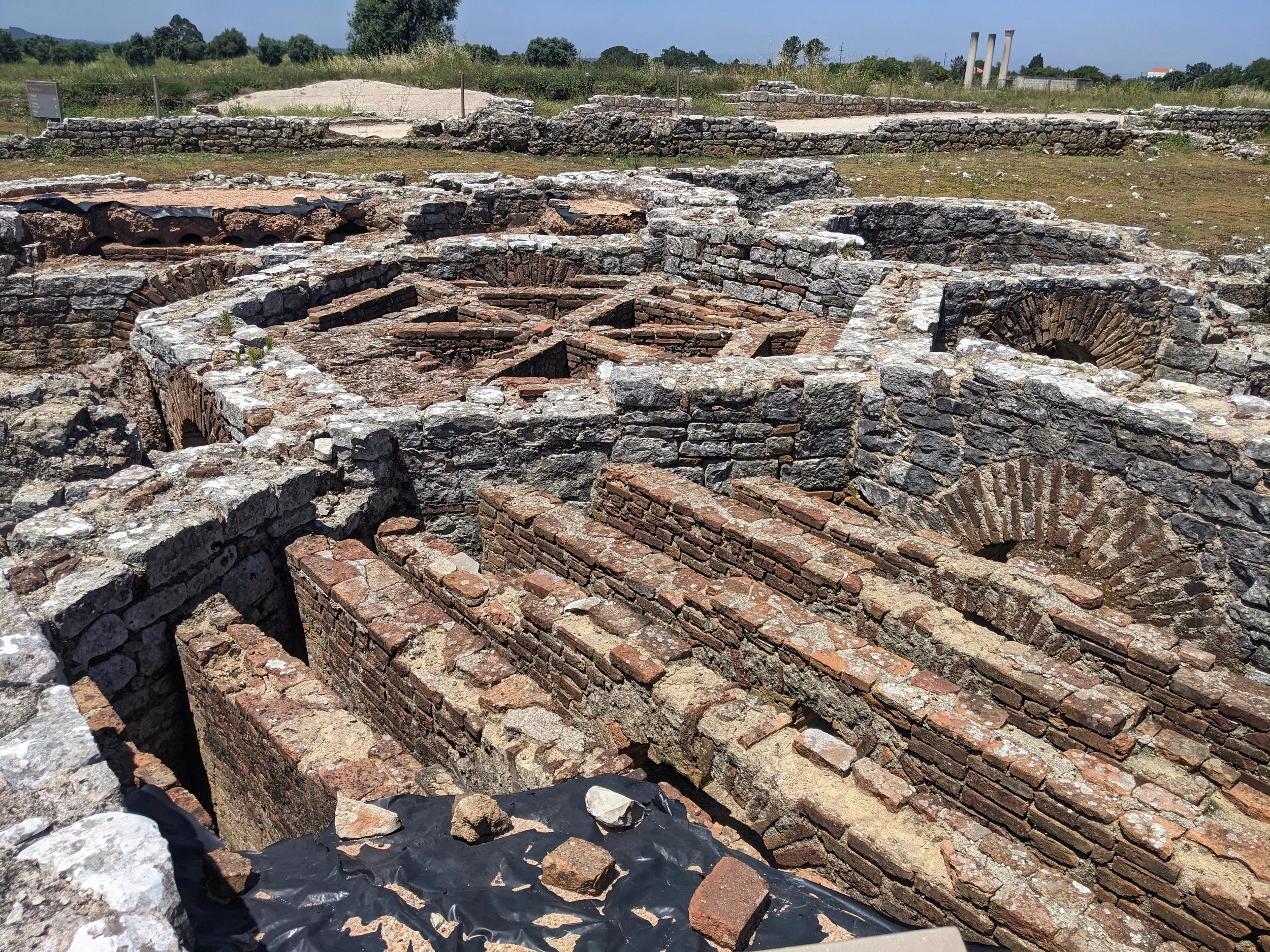
One of the most astonishing features of Conímbriga is what you cannot see: the hipocausto, or hypocaust, the Roman system of underfloor heating. Hot air, generated by a furnace outside the room, was circulated through a raised floor supported by columns of brick. The floor above, often tiled or mosaic, would warm from below.
Standing at the edge of a section where the floor has been removed, you can look down into the network of small brick pillars that held it all up. It is a remarkable thing to see. Romans were walking on heated floors in the first century AD.
The wall and what it meant
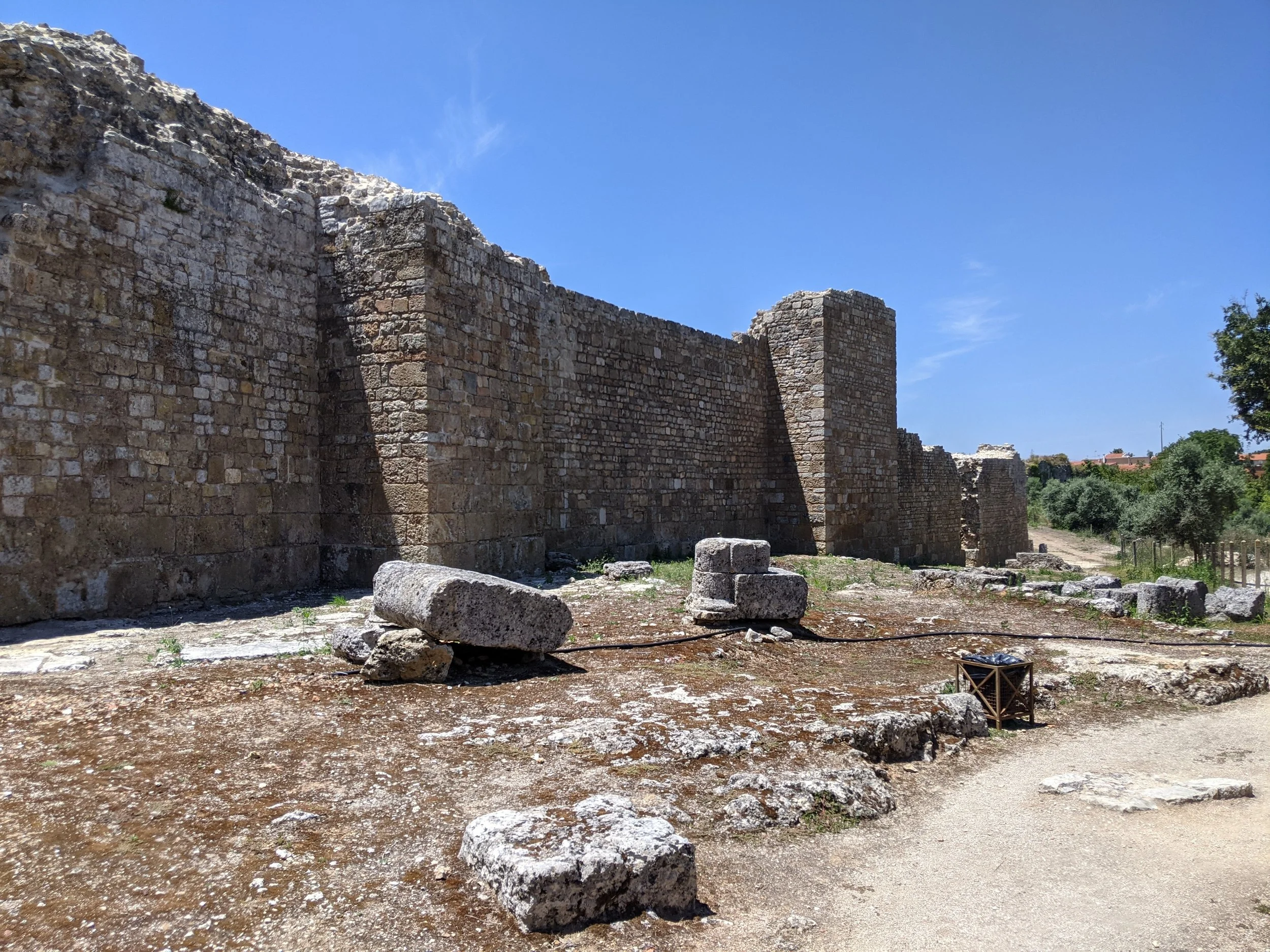
At the end of the 3rd century, Conímbriga was enclosed by a great defensive wall that was approximately 1,500 meters long, with vaulted entrance gates and towers. The wall reduced the city's perimeter, which tells us something: the population was smaller by then, or the resources to defend a larger area were gone.
What historians find interesting about this wall is its character. It is robust but rough. It was made quickly, from thick irregular stones, some of them recycled from earlier buildings. The height (between 5 and 6.5 metres in places) raises questions about whether its purpose was truly military or more symbolic: a declaration of presence, of permanence, even as the Western Empire was beginning to unravel.
The wall did not save Conímbriga in the end. In 465 or 468 AD, the Suevi, a Germanic people who had established a kingdom in northwestern Iberia, attacked. The city was destroyed and its inhabitants were dispersed. The civitas that had stood for centuries emptied.
Not long after, the episcopal seat that had briefly been established at Conímbriga was transferred to Aeminium, the city that would eventually become Coimbra.
The museum and the visitors' centre
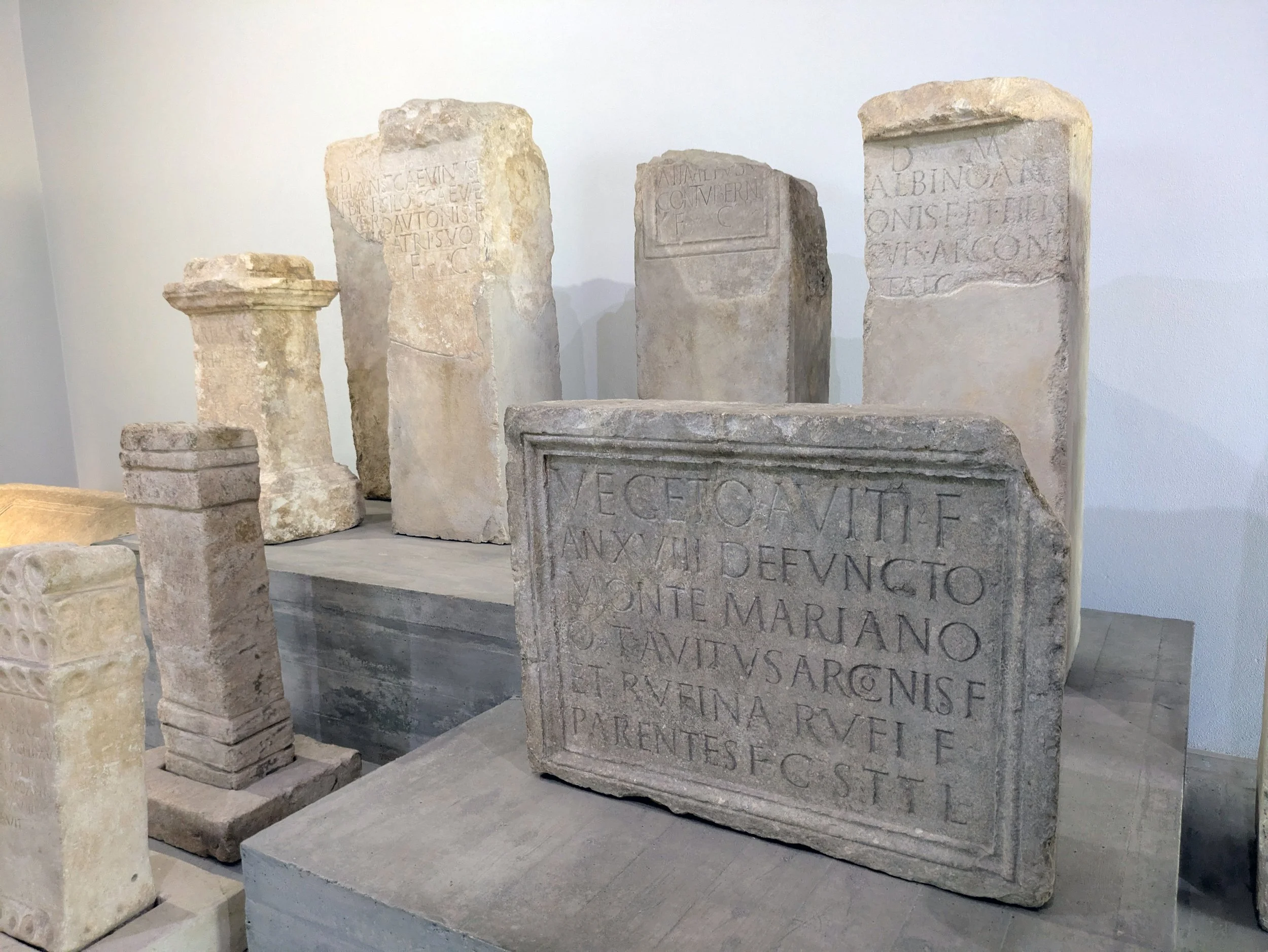
A well-designed visitors' centre and monographic museum sits at the entrance to the site. Inside, you will find objects recovered during excavations: coins, ceramics, surgical instruments, everyday utensils — the small evidence of ordinary life. The museum is calm and well-organized, and it gives context before you step into the ruins.
The permanent exhibition was inaugurated in 1985, the result of decades of collaboration between Portuguese archaeologists and the University of Bordeaux. The names Jorge de Alarcão and Robert Étienne are associated with some of the most significant discoveries here, including the uncovering of the city's Roman center in the 1960s.
Why this matters to a learner of Portuguese
You might wonder what a Roman ruin has to do with learning to speak Portuguese. The answer is: everything, and nothing, and something in between.
Nothing, because the Romans spoke Latin, not Portuguese, and the Portuguese of today would not have been recognizable to anyone in Conímbriga.
But everything, because the story of the Portuguese language begins precisely in places like this. Latin, spoken by Roman settlers and absorbed by local populations across the Iberian Peninsula, slowly transformed over centuries into the languages we now call Portuguese, Spanish, Galician, and others. The words you are learning carry traces of that transformation.
When you say porta (door), or água (water), or casa (house), you are, in a small way, speaking in the same linguistic lineage as the people who once walked these mosaic floors.
And in between, because visiting places like Conímbriga changes the way you hear Portugal. The country begins to feel layered. It isn’t just a modern European nation, but a place with a long, complicated, fascinating past. That layering is part of what makes European Portuguese what it is: a language shaped by Romans, Visigoths, Moors, medieval kings, Age of Discovery sailors, and the quiet continuity of ordinary people living ordinary lives.
The more you understand that context, the more the language opens up.
Before you visit
If you are planning time in Portugal - whether for travel, relocation, or simply the experience of hearing the language in its home - Conímbriga is worth the detour. It isn’t the most visited site in Portugal, which is part of what makes it so good. You set the pace: a focused couple of hours covers the museum and the main ruins, or you can let the afternoon slow down and absorb the history at your own pace.
The site is near Condeixa-a-Nova, approximately 16 kilometres south of Coimbra, and is accessible by car or bus. It is open most days of the year and occasionally hosts educational and cultural events.
You will almost certainly have stretches of the mosaic paths to yourself. Time to look. Time to think. Time to notice the silence where a city used to be.
—
Conímbriga is classified as a national monument and managed by the Instituto dos Museus e da Conservação. The Museu Nacional de Conímbriga is located on-site. More information at museusemonumentos.pt.
