
What the Portuguese Table Can Teach You About Speaking the Language

There’s a particular kind of silence that many European Portuguese learners know well.
You’re à mesa (at the table) surrounded by conversation. You follow the thread. You catch the words, feel the rhythm, understand the jokes a half-second after everyone else laughs. But when it’s your turn to speak, something stalls.
You know the words. You’ve studied them. And yet…
That gap between understanding and speaking is one of the most common places learners get stuck. And one of the least talked about.
The table isn’t just where people eat
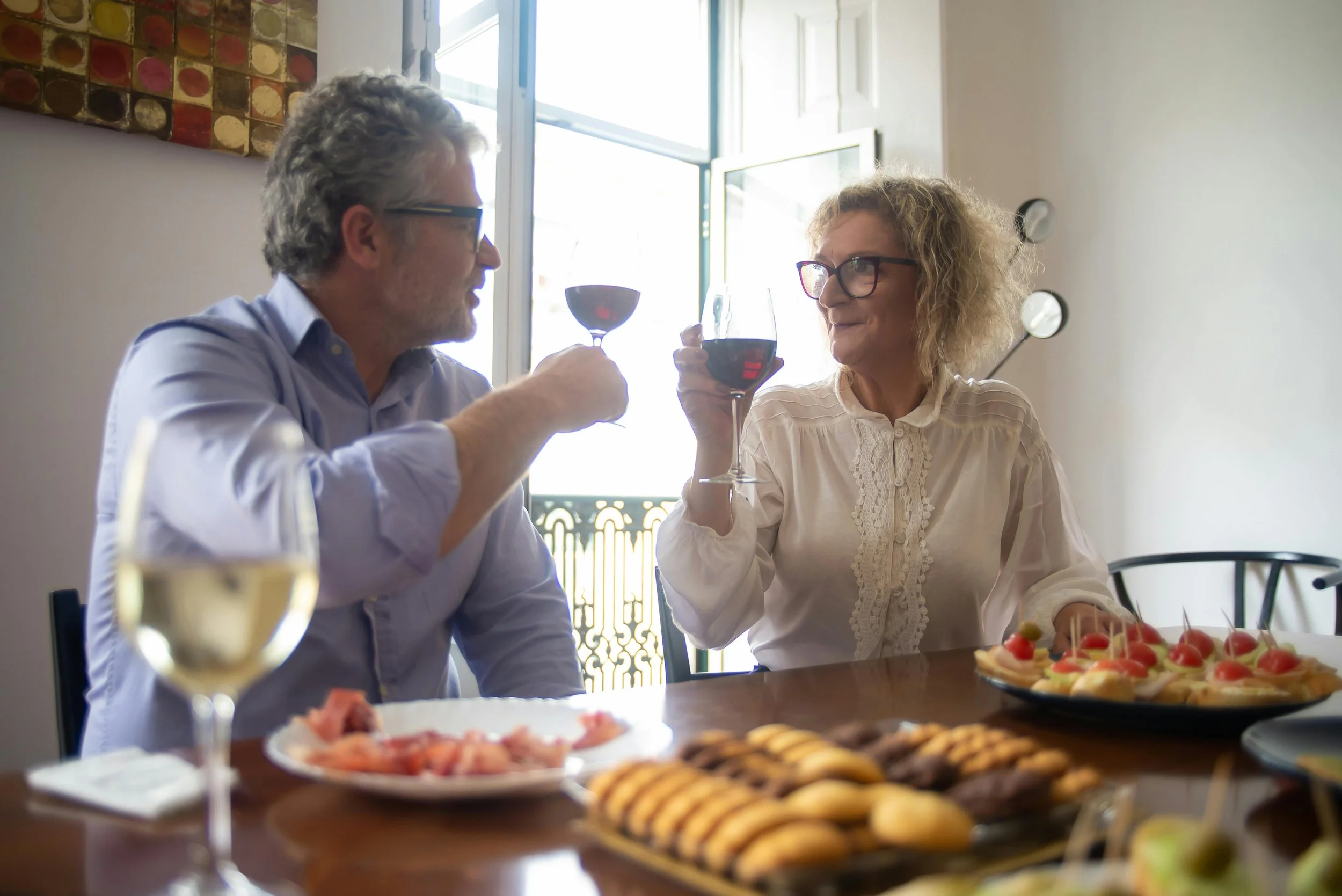
In Portugal, a refeição (a meal) is rarely just about food. It’s one of the primary places where people actually connect; where stories are told; where silence is comfortable; and where the same phrases come around again and again in a natural, unhurried way.
Passa-me isso, se faz favor. Pass me that, please.
Está bom, está. It’s good, really it is.
Mais um bocadinho? Just a little more?
These phrases are the language of convívio, of genuine togetherness. And they’re repeated, meal after meal, in a context where no one is testing you and everyone already knows the conversation might wander.
That kind of repetition, in that kind of atmosphere, is quietly one of the most powerful environments for language practice there is.
Why relaxed repetition works
Language learning research has long pointed toward something that many of us know intuitively: we speak better when we’re not thinking about speaking.
The pressure to perform, to be grammatically correct, to not forget a word mid-sentence, to sound natural is often what creates the freeze. The table removes much of that pressure. The topics are predictable and the stakes are low. The rhythm is slow enough to think.
This is why convívio matters for learners specifically. Not because Portuguese food is beautiful (though it is). But because the table creates exactly the conditions that make language loosen: familiar vocabulary, repetition without drilling, and a social warmth that makes the odd mistake feel like nothing at all.
The gap between understanding and speaking is normal
If you’ve been studying European Portuguese for a while, or if you grew up hearing it at home but never quite had the chance to speak it, this gap is probably familiar.
You’re not behind and you’re not failing. You’re at a very specific and very common stage, one that almost every learner reaches: the stage where your passive knowledge (understanding) has outrun your active knowledge (speaking).
The way through isn’t more grammar. It’s more practice in the right conditions - low pressure, high repetition, real conversation.
The table, in other words.
How to practice European Portuguese naturally, away from the table
Not everyone has access to a Portuguese table. But you can build something with the same qualities.
What you’re looking for is: familiar topics, regular repetition, and a space where mistakes are part of the process, not evidence that you’re not ready.
Most of the tools learners reach for such as apps, grammar books, translation software are good at delivering content. What they can’t offer is a real person who understands where you are, can answer your actual questions, and is genuinely invested in your progress.
That’s what Conversa Club is built around. Direct access to Sérgio - not a chatbot, not a forum, not a set of pre-recorded answers - means you’re never figuring this out alone.
À mesa or not, the practice is the thing. And it helps to have someone at the table with you.
