
Dia de Portugal: What June 10 really means
Every year on June 10, Portugal marks its national day. Flags go up, ceremonies are held, and the President speaks. And if you happen to be in Lisbon or Porto that day, you’ll notice the cities feel a little more formal.
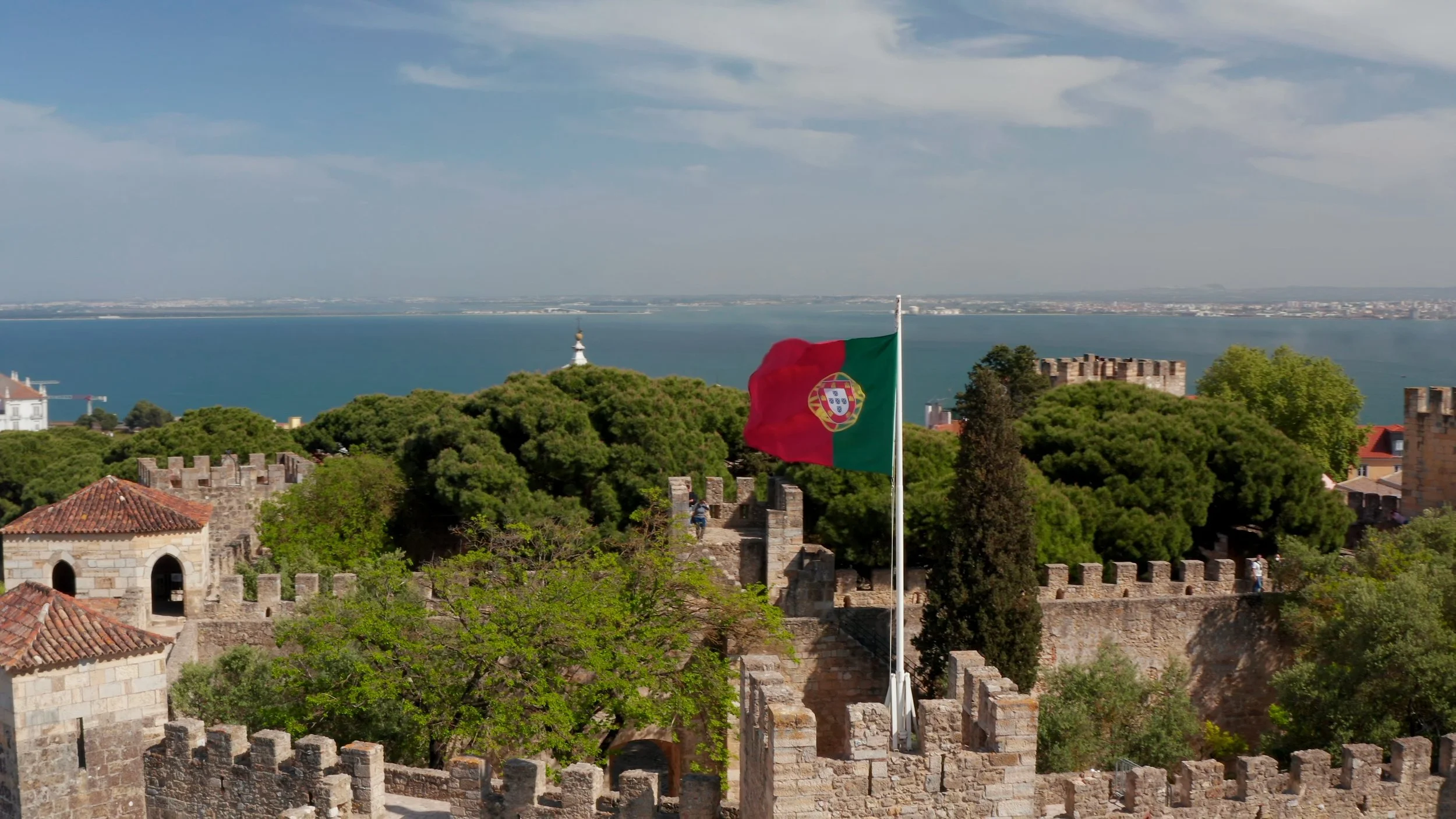
But Dia de Portugal is not quite what most people expect from a national holiday.
It doesn’t commemorate a battle. It doesn’t mark independence, or the founding of a republic, or the birth of a king. Instead, Portugal chose to name its national day after a poet, and that choice says something important about how this country understands itself, its language, and its place in the world.
Why the full name matters
The official name of the holiday is Dia de Portugal, de Camões e das Comunidades Portuguesas, Portugal Day, Camões Day, and the Day of the Portuguese Communities.
Three things are being honored at once: the nation, a poet, and the people who carry Portuguese identity beyond Portugal’s borders. That combination of language, literature, and diaspora is not accidental. It reflects a particular idea about what Portugal is and what holds it together.
Most countries anchor their national identity to territory or political history. Portugal anchors part of its identity to language and to the people who speak it, wherever they happen to be.
Who was Camões, and why does he matter?
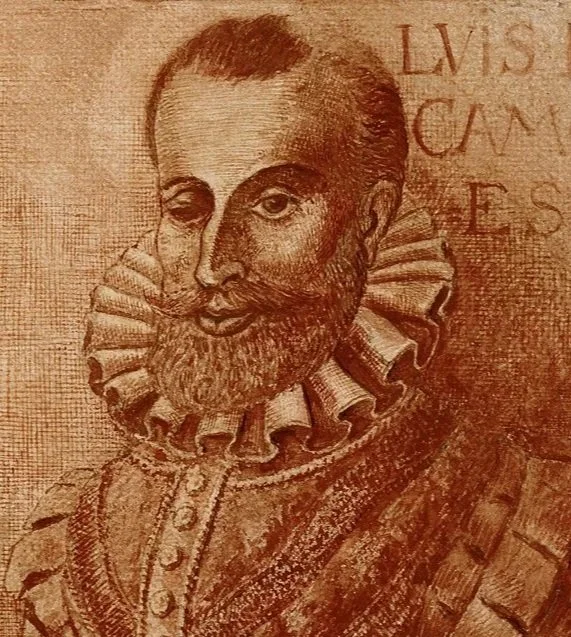
Luís Vaz de Camões is Portugal’s greatest poet. He was born around 1524 and died on June 10, 1580, which is why that date was chosen for the holiday. His death date became the nation’s day of remembrance.
His masterwork is Os Lusíadas (The Lusiads), an epic poem published in 1572. It tells the story of Vasco da Gama's voyage to India, but it’s really a poem about Portugal itself: its history, its people, its ambitions, and its soul. Written in the form of a classical epic modeled after Virgil's Aeneid, it opens with one of the most recognizable lines in the European Portuguese literary tradition:
As armas e os Barões assinalados
Que da Ocidental praia Lusitana
Por mares nunca de antes navegados
Passaram ainda além da Taprobana...
"The arms and the distinguished heroes who, from the western shores of Lusitania, sailed across seas never before navigated, even beyond Ceylon..."
Camões goes on, in the stanzas that follow, to set aside the heroes of classical antiquity - Ulysses, Aeneas, Alexander - and declare the Portuguese and their voyages of discovery his worthy subject instead. The implication is unmistakable: European Portuguese is a language capable of carrying an epic, and Portugal a nation deserving of one.
That claim has resonated for centuries. Camões is not simply a literary figure in Portugal, he’s a cultural symbol. His image has appeared on currency. Streets, schools, and theaters across Portugal and the Portuguese-speaking world bear his name. O Instituto Camões, Portugal’s official cultural and language institute (similar to France’s Alliance Française), takes its name from him.
When Portugal chose to name its national day partly after Camões, it was making a statement: that language and literature are not ornaments to national identity; they’re central to it.
What this means for European Portuguese learners
Understanding Camões and Os Lusíadas is not a requirement for learning European Portuguese. Most learners will never read the original text; it’s dense, archaic, and even native speakers find it challenging.
But the cultural weight of Camões is worth knowing about, for a few reasons.
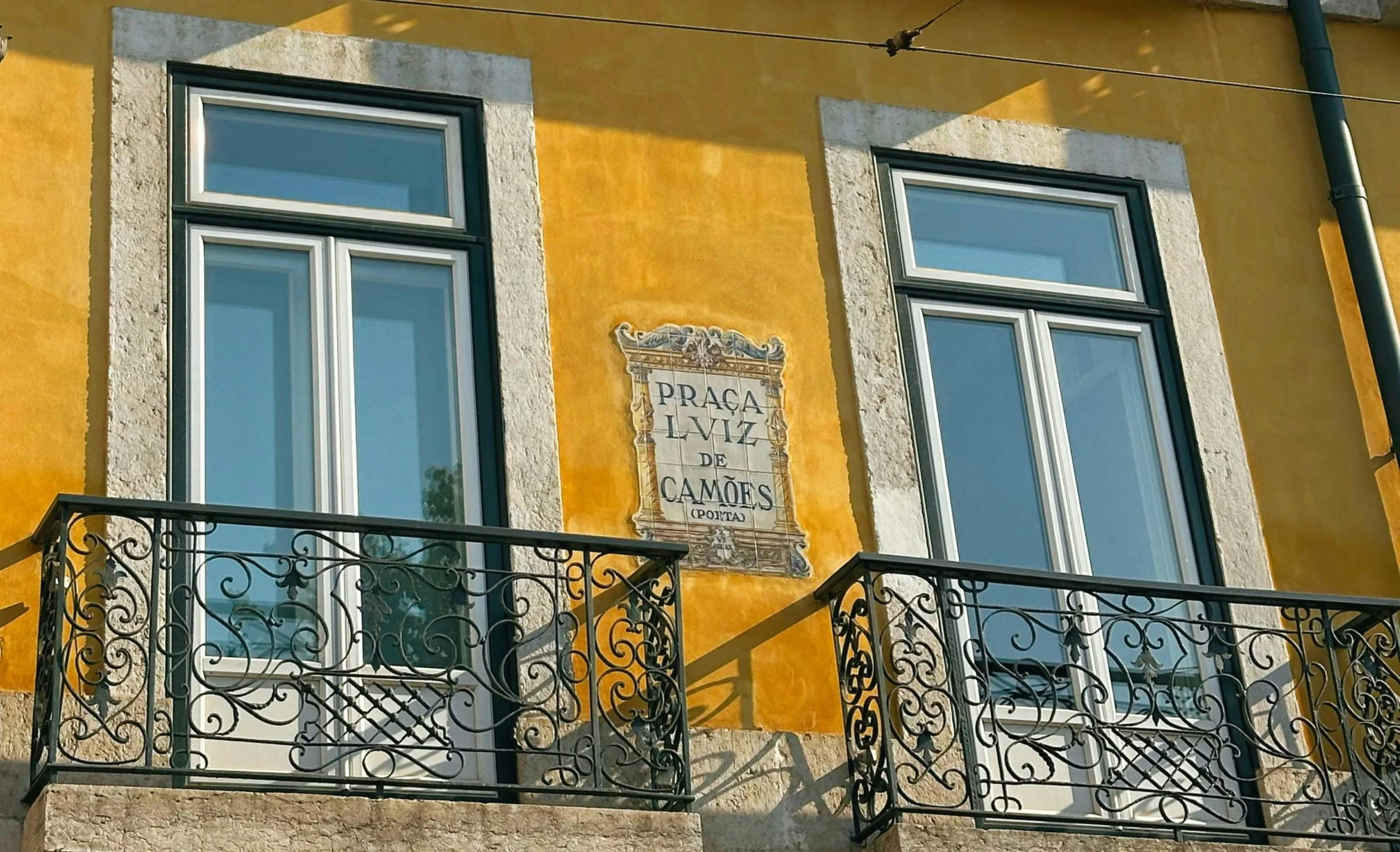
First, references to Camões appear in everyday Portuguese life. You’ll encounter his name in place names, on signs, in passing references in newspapers and conversation. Knowing who he is gives you context that an app or a textbook won’t provide.
Second, the reverence Portugal has for its language, the care taken to protect and celebrate European Portuguese specifically, is connected to this tradition. Portugal doesn’t treat its language as merely practical. It treats it as something worth honoring. That attitude shows up in how people speak, in the formality that still exists in certain registers, and in the genuine pride many Portuguese people feel when a foreigner makes the effort to learn their language properly.
Third, if you are preparing for the CIPLE (Certificado Inicial de Português Língua Estrangeira), the language exam required for citizenship and residency applications, cultural knowledge of this kind is increasingly relevant. The Portuguese government is actively considering adding a cultural component to the CIPLE and related exams. Understanding what Dia de Portugal commemorates, who Camões was, and what Os Lusíadas represents would be exactly the kind of knowledge such a component might assess.
The third part of the name: the communities
Das Comunidades Portuguesas, of the Portuguese Communities is the part of the holiday’s name that is arguably the most meaningful.
Portugal has one of the largest diasporas in the world relative to its population. Estimates suggest there are between four and five million Portuguese citizens living abroad, in places as varied as France, Luxembourg, Switzerland, Brazil, the United States, Canada, Angola, and Mozambique. Generations of Portuguese families have built lives elsewhere while maintaining deep linguistic, cultural, emotional ties to Portugal.
Dia das Comunidades Portuguesas was formally incorporated into the national holiday in 1977, just three years after the Revolução de Abril (Carnation Revolution) of 1974 that ended decades of authoritarian rule. The new democratic Portugal wanted to acknowledge and honor these communities as part of the national fabric, not as people who had left, but as people who carried Portugal with them.
For heritage speakers and anyone with Portuguese family roots, this dimension of the holiday has particular resonance. The language you’re learning or re-learning, or trying to hold onto, is part of something that Portugal itself considers worth honoring formally, once a year, as part of its national identity.
If you want to hear those stories firsthand, Portugueses no Mundo is a good place to start. It’s a podcast produced by RTP (Rádio e Televisão de Portugal), Portugal's national public broadcaster, and hosted by journalist Alice Vilaça. Each episode features conversations with Portuguese people living abroad: in Europe, the Middle East, South America, and beyond. They talk about what brought them there, how they keep their connection to Portugal alive, and what it means to be Portuguese at a distance.
The series is in European Portuguese, which makes it a genuine listening resource as well as a cultural one. Episodes are available free on RTP Play, and also on Spotify and Apple Podcasts.
A note on the date itself
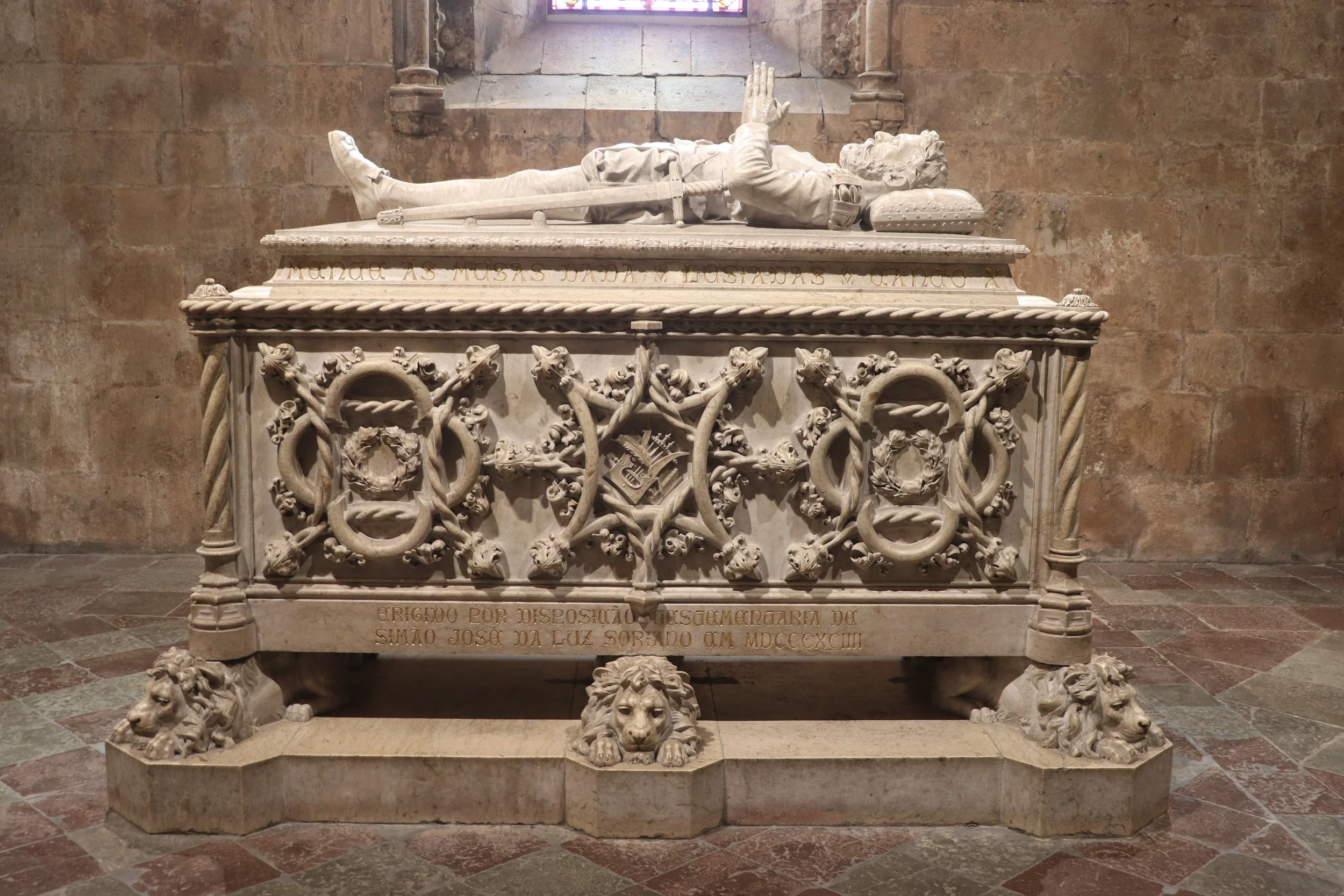
Tomb of Luís Vaz de Camões. Jerónimos Monastery. Lisboa.
June 10, 1580 was the day Camões died. The historical record on his death is somewhat uncertain. The exact circumstances are not fully known, and some accounts suggest he died in modest circumstances, his great work celebrated but his personal situation difficult.
The date was officially adopted as the national holiday in 1977, as part of the democratic reconstruction of Portugal following the Carnation Revolution. Before that, June 10 had been observed in various forms, but its modern significance as a day that explicitly honors both the language and the diaspora belongs to the democratic era.
Key terms from this post
Dia de Portugal, de Camões e das Comunidades Portuguesas
The full official name of Portugal’s national holiday, observed on June 10
Luís Vaz de Camões
Portugal’s most celebrated poet (c. 1524–1580)
Os Lusíadas
Camões’s epic poem, published in 1572; considered the foundational text of Portuguese literary identity
O Instituto Camões
Portugal’s official institute for the promotion of the European Portuguese language and culture abroad
CIPLE
Certificado Inicial de Português Língua Estrangeira; the entry-level European Portuguese language certification required for citizenship and residency
The Carnation Revolution of April 25, 1974, which ended Portugal’s authoritarian Estado Novo regime and established democracy
Comunidades Portuguesas
The Portuguese communities abroad; the global diaspora formally honored as part of the national holiday
Want to explore further?
If this post has opened up questions about Portuguese history, the language exams, or how cultural knowledge fits into the broader journey of learning European Portuguese, the Conversa Club community is a good place to take those questions.
We explore European Portuguese the way it actually lives: in its culture, its history, its nuance, and its everyday use. Step by step, and with real substance.
